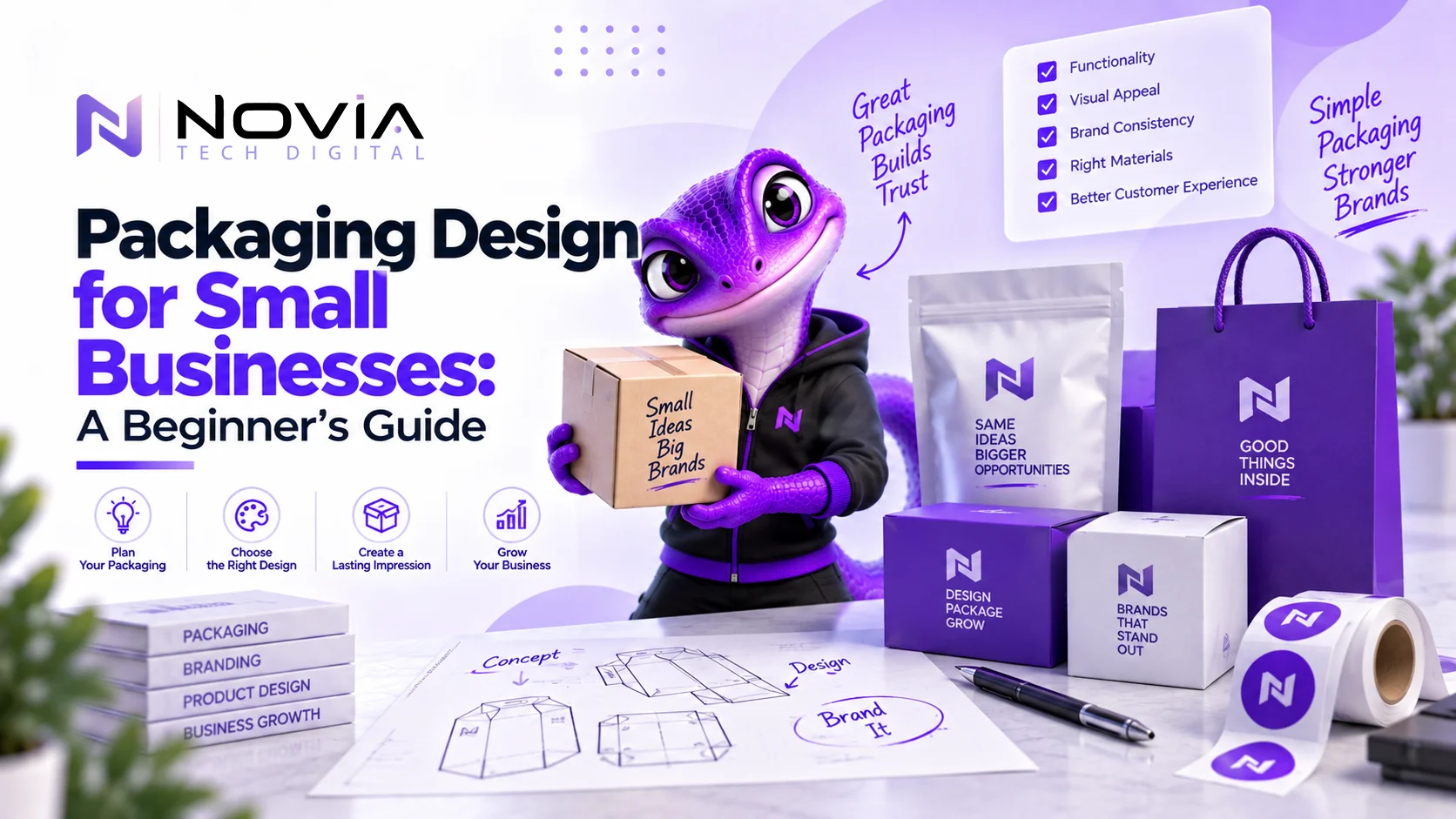
Your customer may never meet you in person. They may never visit your shop. But if you sell a physical product, they will hold your packaging.
That moment matters. Packaging is often the first physical contact a customer has with your brand, and it can shape how they feel about the product before they even use it.
For small businesses, packaging design can feel like a big and expensive decision. This guide explains the basics in simple terms, so you can plan it properly and avoid common mistakes.
What Is Packaging Design?
Packaging design is the process of creating the structure, graphics, and information for the container or wrapping that holds your product. It includes:
- The shape and type of packaging, such as a box, pouch, bottle, jar, bag, or tube
- The visual design, including your logo, colors, fonts, and imagery
- The labels and printed information
- Any extras, such as inserts, stickers, sleeves, or thank-you cards
Good packaging protects the product, communicates what it is, and reflects your brand.
Why Packaging Matters for a Small Business
It makes a first impression. On a shelf or in a customer’s hands, packaging is your sales message before anyone reads a word.
It supports your brand. Packaging that matches your website, social media, and logo makes your business look consistent and professional.
It tells people what the product is. Clear packaging helps customers understand what they are buying and why it is for them.
It can help you stand out. In a crowded category, a distinctive design makes it easier for customers to notice and remember you.
It affects the unboxing experience. For online sales, opening the package is part of the customer experience, and many customers share it on social media.
Packaging will not make a poor product sell. But a good product with careless packaging can look less trustworthy than it deserves.
What to Decide Before You Design
Before any design work starts, get clear on a few practical points.
Your product. Size, weight, fragility, and whether it needs special protection or storage.
Your customer. Who are they, and where will they see your product? A shelf in a store, a marketplace thumbnail, and a delivery box all call for different design choices.
Your budget and quantity. Custom packaging often has minimum order quantities. Small batches may suit labels, stickers, or sleeves on standard packaging.
Your materials. Cardboard, paper, glass, plastic, metal, and compostable options all differ in cost, appearance, and practicality.
Your shipping needs. If you ship products, the packaging must survive the journey. A beautiful box that arrives damaged hurts your brand.
The Key Elements of Good Packaging Design
1. Brand consistency. Use your logo, color palette, and fonts in the same way as on your website and social media. Customers should be able to link the package to your brand instantly.
2. A clear hierarchy. Decide what should be seen first. Usually that is the brand name, then the product name, then a few key details. Too many messages make everything harder to read.
3. Readable text. Check font size and contrast, especially on small packages and curved surfaces.
4. Honest, useful information. Include the details customers need, such as the product type, size or quantity, and usage instructions. Depending on your product and market, there may also be legal labeling requirements, so check what applies to you before printing.
5. Fit for purpose. The design should work for the actual shape and material, not just on a flat screen.
6. Simplicity. Many strong packages use a limited palette and a clear focal point.
How the Packaging Design Process Works
Every designer has their own method, but most projects follow similar steps.
- Brief. You share your product, audience, brand details, budget, and any requirements.
- Research. The designer reviews competitors and your category to find ways to stand out.
- Concepts. You receive initial design directions.
- Dieline and mockups. A dieline is the flat template of the package showing folds, cuts, and print areas. Designs are placed on it and shown as mockups.
- Revisions. Feedback is used to refine the chosen direction.
- Proofing. Ask for a printed proof or sample if possible, since colors on screen and in print can look different.
- Final files. You receive print-ready files in the format your printer needs.
Common Packaging Mistakes to Avoid
- Designing before knowing the size. Always confirm the exact dimensions and the printer’s dieline first.
- Putting too much on the package. More text does not mean more clarity.
- Skipping a print test. Screen colors and printed colors often differ.
- Ignoring minimum order quantities. Check them with the printer before committing to a design.
- Choosing looks over practicality. Packaging must still protect, stack, ship, and open easily.
- Forgetting the online view. If you sell online, your package may first appear as a small thumbnail, so the design should still read clearly at that size.
- Using different branding from everything else. Packaging should look like it belongs to the same business as your website and social pages.
Questions to Ask a Designer or Printer
- Do you provide dielines and print-ready files?
- What is the minimum order quantity?
- Which materials do you recommend for my product?
- How many concepts and revisions are included?
- Can I get a sample before a full print run?
- What is the timeline from approval to delivery?
Frequently Asked Questions
How much does packaging design cost?
It depends on the type of packaging, the number of concepts, the complexity, and the printing method. Ask for a quote based on your specific product and quantity.
Do I need a designer for packaging?
For simple stickers or labels, templates can work. For custom boxes or products that need to compete on a shelf, a professional designer is usually worth it.
What is a dieline?
It is a flat outline of a package that shows where it will be cut and folded, and where the design goes.
Can I start with labels instead of custom boxes?
Yes. Many small businesses start with well-designed labels or sleeves on standard packaging and move to custom packaging as they grow.
Should my packaging match my logo and brand?
Yes. Consistent packaging strengthens recognition and makes your business look more established.
Final Thoughts
Good packaging is not about spending the most. It is about being clear, consistent, and practical, so your product looks right and arrives right.
Plan your product, customer, and materials first, then design with those limits in mind. If you want professional help, NoviaTech Digital offers graphic design services including packaging design, built around your brand. You can also read our guide to small business branding or contact us to discuss your project.